
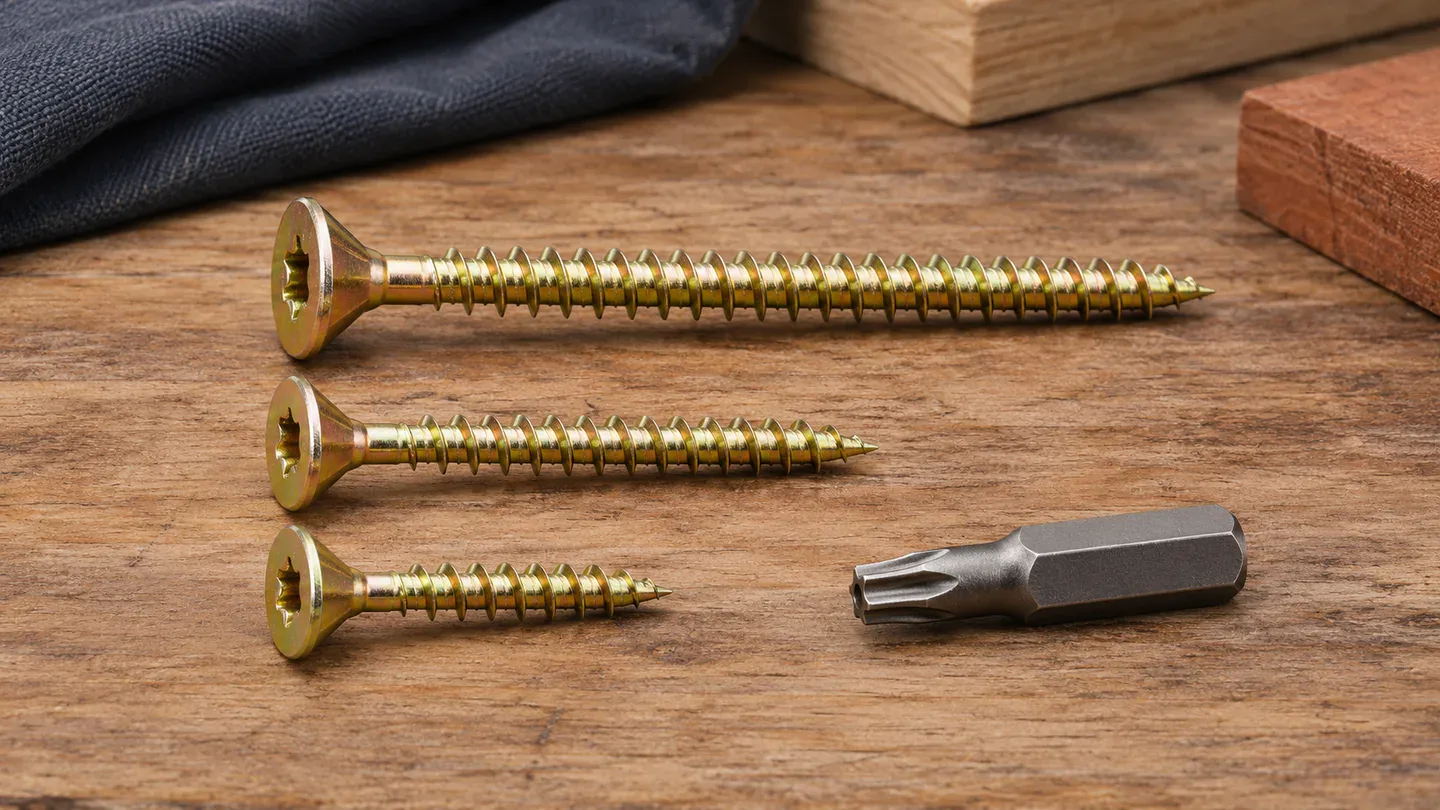
Wood screw sizes are usually described by a diameter or gauge and a length. That is a useful starting point, but two screws with a similar size label can have different head shapes, drive recesses, threads, materials, coatings and pack quantities.
This guide explains how to read a wood screw size chart and turn a size requirement into a specification a supplier can quote. It also shows how to compare bulk offers without assuming that every “star-drive wood screw” is the same product.
Wood screw size chart: gauge and thread diameter
The table below shows reference major thread diameters from Bolt Depot’s wood screw diameter chart. Major diameter is measured across the outside of the threads. The values help explain the gauge system; they are not a specification, tolerance or stock list for a particular HardwareSourceCo screw.
| Screw size | Reference major thread diameter | Approximate metric conversion |
|---|---|---|
| #4 | 0.112 in. | 2.84 mm |
| #5 | 0.125 in. | 3.18 mm |
| #6 | 0.138 in. | 3.51 mm |
| #7 | 0.151 in. | 3.84 mm |
| #8 | 0.164 in. | 4.17 mm |
| #9 | 0.177 in. | 4.50 mm |
| #10 | 0.190 in. | 4.83 mm |
| #12 | 0.216 in. | 5.49 mm |
| #14 | 0.242 in. | 6.15 mm |
Source: Bolt Depot wood screw diameters. Metric values are calculated from the source’s decimal inches using 25.4 mm per inch and rounded to two decimals using half-up rounding. These are selected sizes; the linked reference lists additional gauges. A nearby metric size is not automatically an equivalent part. Check the relevant standard, manufacturer’s drawing and required tolerances.
For example, the table’s #8 reference is approximately 4.17 mm. A screw advertised as 4 mm may be close in a catalog, but the rounded numbers alone do not establish identical thread geometry, head dimensions, tolerance or performance.
Understand the parts of a wood screw
When reviewing a drawing or sample, identify these features separately:
- Head: the top of the screw. A countersunk head is designed to fit a corresponding recess; other head shapes may sit above the surface.
- Drive recess: the shape engaged by the driver bit, such as a cross or star-shaped profile. The drive type and bit size are separate from the head shape.
- Shank: the body below the head. Some screws have a smooth portion; others have threads extending much closer to the head.
- Thread: the raised form that engages the substrate. Record thread coverage and geometry where they affect the application.
- Point: the screw’s end. Its design may influence installation, but a visual description does not prove that no pilot hole is needed.
Practical distinction: “countersunk” describes the head shape; “star drive” describes the drive recess. A useful purchase specification can contain both.
A quick way to distinguish the terms
Head + drive recess  →  shank / thread  →  point
      ↑                       ↑
  driver-bit fit      diameter measured across threads
A countersunk head and a star-shaped drive can occur on the same screw. The head shape, recess profile and bit size are separate entries on the purchase drawing.
How to measure screw diameter and length
Measure the major thread diameter across the outside of the threads with an appropriate measuring tool. If a drawing specifies a shank, root or head diameter instead, measure the stated feature; the values are not interchangeable.
Length measurement depends on the head shape and the applicable product specification. For many countersunk screws the stated length includes the head, while for many non-countersunk heads it is measured from beneath the head. Confirm the convention on the supplier’s drawing rather than applying one rule to every fastener. Bolt Depot illustrates common fastener length measurements.
When matching an existing screw, provide photographs and the measured head, recess, diameter and length. A drawing and an approved sample are more useful than a single rounded dimension.
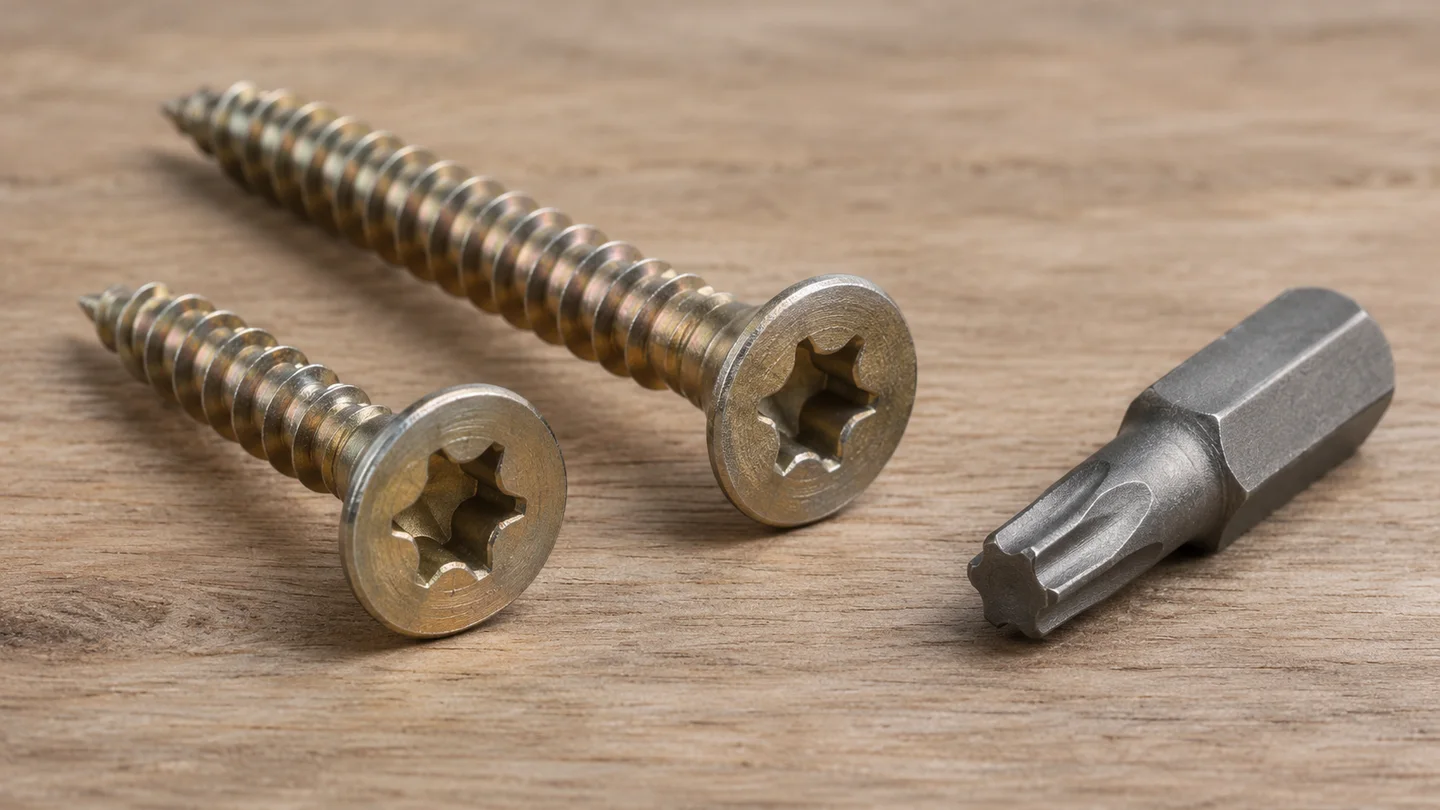
Illustrative AI-generated image; use the written guidance and the supplier’s documentation for measurements.
How to choose screw length, head and drive
Start with the joint: the materials, their thicknesses, the available depth, the required finish and how the load will be applied. The screw must suit the actual connection. Avoid using a generic length ratio as a structural design rule; structural applications require the applicable engineering design and the fastener manufacturer’s instructions.
For a countersunk star-drive wood screw, confirm at least:
- Diameter and length, with the standard and measuring convention.
- Head dimensions and countersink geometry.
- Drive profile and matching bit size.
- Thread coverage, point and any smooth shank length.
- Base material, heat treatment and finish where relevant.
Two screws can share a head and nominal length but use different bit sizes or coatings. Do not assume the bit is included in each pack.
Do wood screws need pilot holes?
Pilot-hole requirements depend on the screw, the substrate and the installation. Wood species, density, distance from an edge, screw diameter and point geometry can all matter. The safest procurement question is: What installation guidance applies to this exact screw in our intended material?
Ask whether the supplier has recommended pilot and clearance-hole dimensions for the selected screw and substrate, and validate the joint with an appropriate sample or technical review. A screw described as self-drilling is not proof that a pilot hole can be omitted in every material or application.
The US Forest Service Wood Handbook discusses fastenings as part of wood construction. Use its guidance within its stated scope and alongside the relevant product instructions.
Compare bulk wood screw quotes on the same basis
A quoted price is useful only when the items and commercial terms are comparable. Record the following for each proposed line item:
| Specification or term | What to confirm |
|---|---|
| Diameter and length | Size system, units, drawing and tolerances |
| Head and drive | Head shape, recess profile and required bit size |
| Thread and point | Coverage, geometry and installation guidance |
| Material and finish | Base material, heat treatment and coating details |
| Application | Indoor/outdoor exposure and substrate requirements |
| Packaging | Pieces per pack, packs per carton and included bits |
| Price basis | Per piece, per box or per 1,000 pieces |
| Evidence | Approved sample, inspection criteria and relevant test documents |
| Delivery | Quantity, lead time, destination and agreed trade terms |
Example: the two quotes that are not yet comparable
Hypothetical example: two suppliers both quote “5,000 star-drive wood screws.” Supplier A lists diameter, length, finish and pieces per box. Supplier B gives only the total price and quantity.
Supplier B’s screw is not automatically inferior, but the offers are incomplete for comparison. Ask B for the same drawing, drive size, material, coating and packing information. Then convert both prices to a common unit, such as price per 1,000 pieces, while keeping freight, taxes and agreed trade terms separate and explicit.
For instance, if a hypothetical box contains 100 screws and costs $8, the product price is $80 per 1,000 screws before freight, taxes and other charges. That is arithmetic, not an actual offer.
Copyable wood screw enquiry line
Application / wood or substrate:
Required standard or drawing:
Diameter and length, including units:
Head type and dimensions:
Drive profile and bit size:
Thread coverage and point requirements:
Material, finish and service environment:
Pieces per pack and whether bits are included:
Quantity per size:
Sample, testing and documentation requirements:
Destination and requested delivery terms:
For mixed sizes, send one line per size and pack configuration. Confirm whether the quoted minimum and price apply per size, per finish or to the order as a whole.
Frequently asked questions
What does the number on a wood screw mean?
A gauge number generally identifies a size associated with diameter in that screw system. The actual measurement and tolerance depend on the applicable product specification.
Are metric and gauge sizes exact replacements?
Not automatically. A metric conversion can be a useful approximation, but compare the actual drawing, dimensions, thread, head and required tolerances before substitution.
Do all star-drive screws use the same bit?
No. Star-shaped drive recesses come in different sizes and may differ in profile. Check the specified drive and bit for the exact screw.
Can I use the same screw outdoors?
Only after confirming the base material, finish, exposure, substrate compatibility and applicable product guidance. An indoor listing or a finish name by itself does not prove suitability for a particular outdoor environment.
Discuss your wood screw requirements and include your drawing, required sizes, packaging and quantities in the enquiry.